Cell Averaging CFAR (CA-CFAR)

Adaptive Thresholding in Radar Detection Using Constant False Alarm Rate (CFAR) Techniques

Target detection is one of the most important and challenging tasks in a radar system. After transmitting a pulse, the radar receives echoed or reflected signals and begins processing them. A fundamental difficulty is that the received signal may originate from a genuine target, from static objects such as terrain or buildings, or from various noise and interference sources. The primary objective of radar signal processing is therefore to reliably distinguish true targets from these unwanted returns and to maximize the probability of detection. Background Figure 1 illustrates a typical radar detection chain. In a conventional RADAR receiver, the incoming

Continue reading
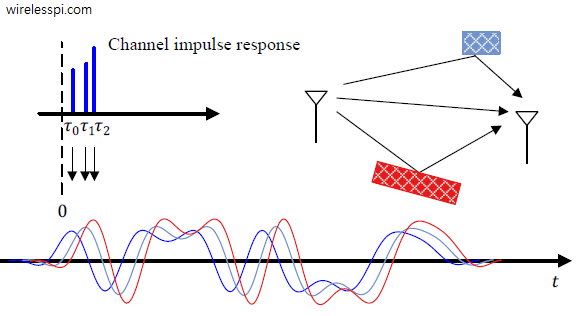
Multiple paths arriving at the Rx with different strengths and delays

Carrier Phase-Based Ranging in Indoor Multipath Channels

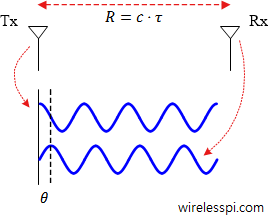
Indoor positioning is one of the core technologies behind the idea of Internet of Things (IoT). Some of the use cases are asset tracking and management, factory automation systems, virtual and augmented reality applications, social media relevance and precision marketing in shopping malls. Distances between wireless devices can be determined through various ranging techniques that were introduced in the big picture of localization. Among the candidates, phase based ranging is a low-cost and accurate method that can be implemented on cheap hardware and deployed in real scenarios with relative ease (even in the absence of synchronization among nodes). In this

Continue reading
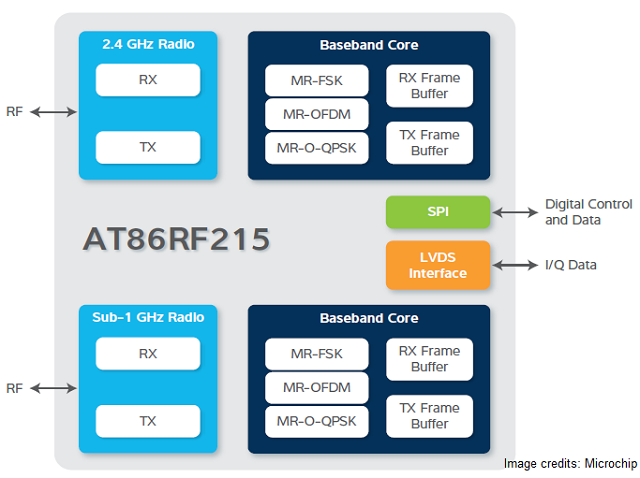
AT86RF215 block diagram

On Microchip AT86RF215 Radios

It is a little unusual to describe a hardware radio on a website that focuses on software radios. But I was impressed with the functionality and performance of AT86RF215 transceivers by Microchip during my experiments. I have used them for node localization and they can be put to many other good uses, including, …. here is the surprise, …. as software defined radios. Through a little programming effort, I/Q samples from the digital frontend can be directly accessed using which you can run your own baseband on a digital signal processor. Although interfacing with an external device for I/Q samples

Continue reading
Two way transmission

The Big Picture of Localization

Digital Signal Processing (DSP) enables us to find the range of a device by transmitting a wireless signal with a particular structure under some conditions. To understand how this process works, we need to look at the big picture of a localization process. Localization implies locating the unknown position of a source which can be computed in a straightforward manner if its ranges from some reference nodes can be found. Various techniques are employed for this purpose, some of which are Received Signal Strength Indicator (RSSI), time of arrival, time difference of arrival and angle of arrival. Phase of arrival

Continue reading
A beam formation process can be seen in water waves by throwing two stones

Beamforming – Mindfulness of an Antenna Array

If beamforming has to be explained in the most succinct manner, it is the mindfulness of an antenna array where it focuses its attention towards one specific location (or a few specific locations). We find out in this article how it is achieved. As opposed to its reputation, beamforming is not a mysterious technology. It has been used by signal processing engineers for radio applications since long. For example, Marconi used four antennas to increase the gain of signal transmissions across the Atlantic in 1901. It has also been known since 1970s that multiple antennas at the base station help

Continue reading